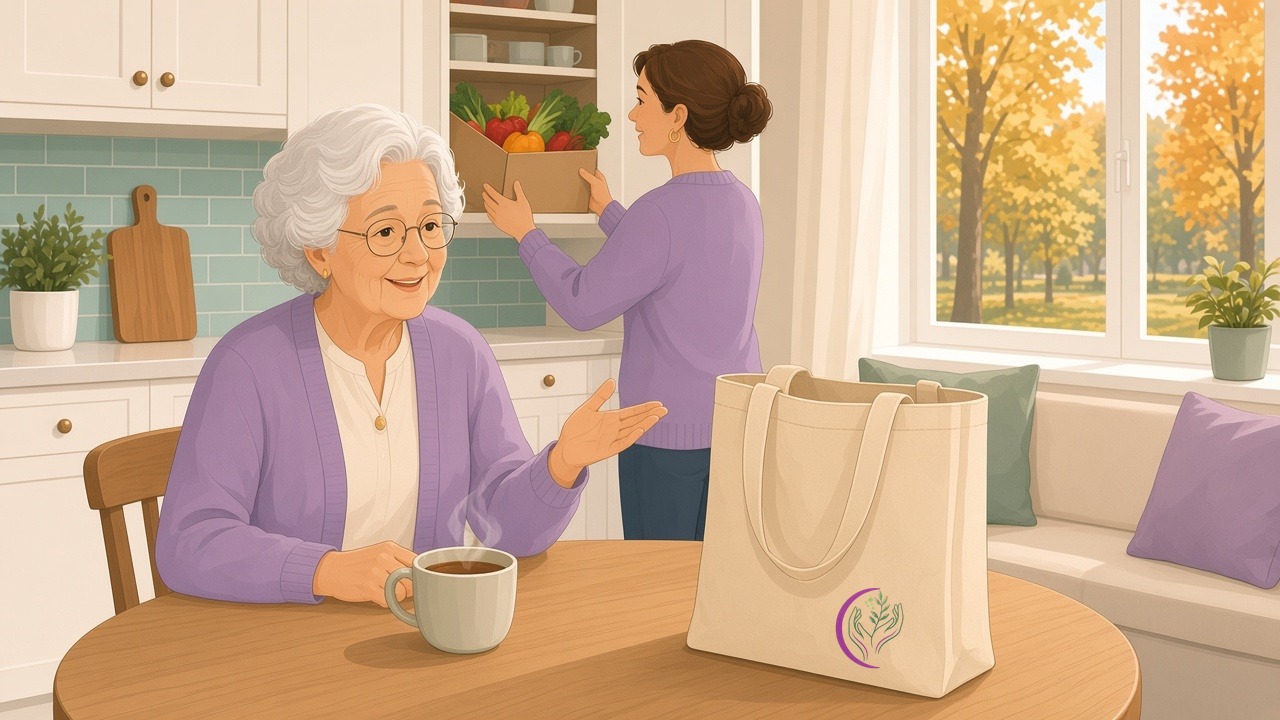
Saying yes to help at home is one decision. Picturing what happens when the caregiver actually walks in is another. A lot of people put off getting help because they can't imagine it, and what they imagine is worse than the real thing.
So here's an ordinary visit, told from your side of the door. Yours will look different, because the plan is built around your day. That's the point.
The knock at the door
The caregiver knocks or rings, and then it's your house and your rules. Some people want a minute to get to the door. Some want shoes off at the mat. Say what works for you.
The first few minutes are small talk with a purpose. How did you sleep? Is today a good day or a stiff one? Anything different since last time? Your answers set the pace for the rest of the visit.
Getting ready for the day
If the visit is in the morning, this is often the first job. A caregiver can help with a bath or shower, getting dressed, brushing hair, and getting to the bathroom and back.
You stay in charge of how much help that means. On a good morning it might be standing nearby in case the tub gets slick. On a hard one, it might be help with every button. If privacy is the part that worries you, our post on privacy as part of the job covers the house rules worth saying out loud.
Breakfast or lunch, your way
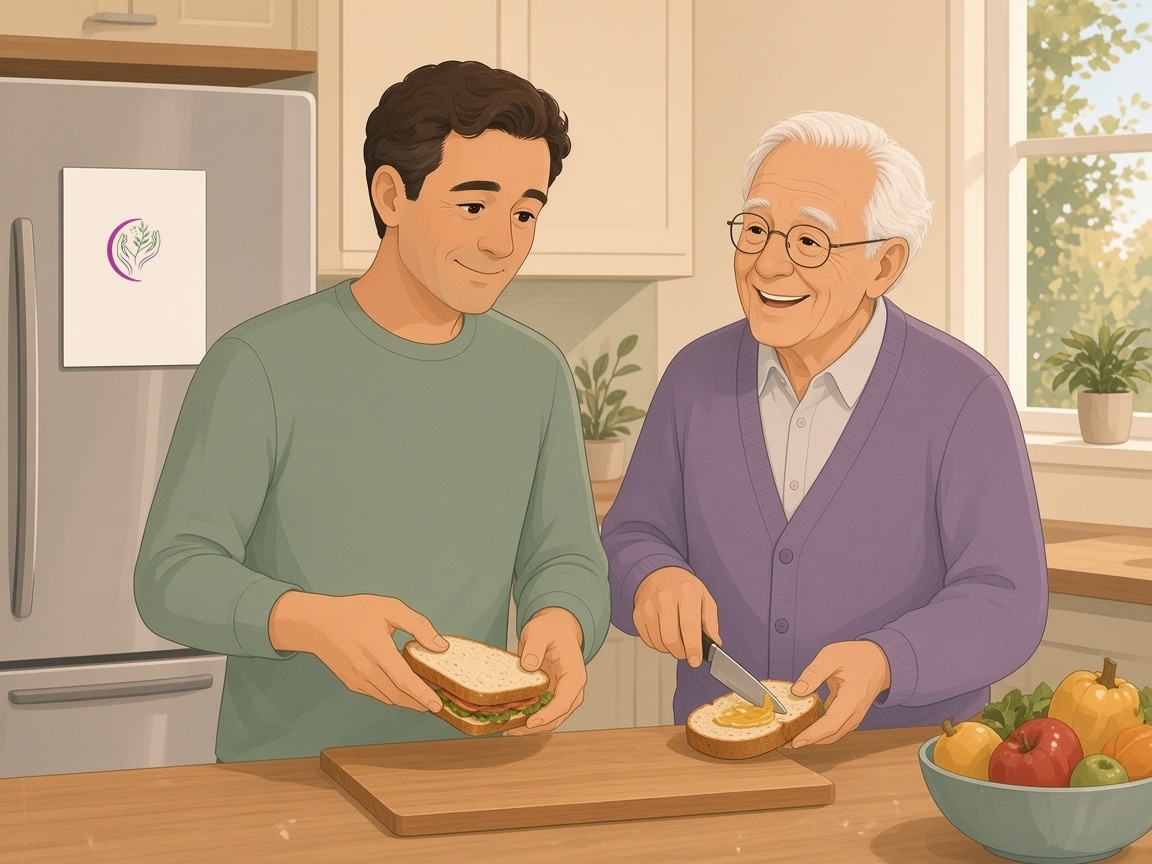
Next comes food. A caregiver can cook a meal, make one with you, or set you up with something easy for later. Plenty of people like to keep doing the parts they enjoy. You spread the mustard, they slice the tomato.
Tell them how you like things. Eggs over easy, no onions, the good knife stays in the drawer. If your doctor gave you food rules, put them on the fridge so nobody has to guess.
A reminder about your pills
If it's time for your medicine, the caregiver reminds you and keeps to the routine you already have. "It's ten o'clock, time for the morning ones." That's the whole job. Your doctor and pharmacist handle the doses.
The house
While the kettle's on, the house gets some attention. Light housekeeping means the rooms you live in: dishes, wiping the counters, a load of laundry, fresh sheets, a pass with the vacuum. It doesn't mean cleaning out the garage.
A good caregiver doesn't wait to be handed a list. Within the care we provide, they look for what needs doing. If the bathroom rug keeps sliding or the milk's about to run out, they notice and mention it.
Errands and getting out
Some visits include a trip out. That might be the grocery store, a pharmacy pickup, or the post office. The caregiver can drive your car, or you can ride in theirs. If you'd rather take a rideshare or another ride service, they can go with you. Some people like to go along and pick out their own peaches. Others would rather send the list and stay home with the crossword. Either is fine.
Company
This is the part people underrate until they have it. A hand of cards, a slow walk to the mailbox, the photo albums, the porch at four o'clock. Conversation with someone who's in no hurry to leave counts as care too.
If you'd like a few ideas, try these brain games you can do at the kitchen table.
Before they leave
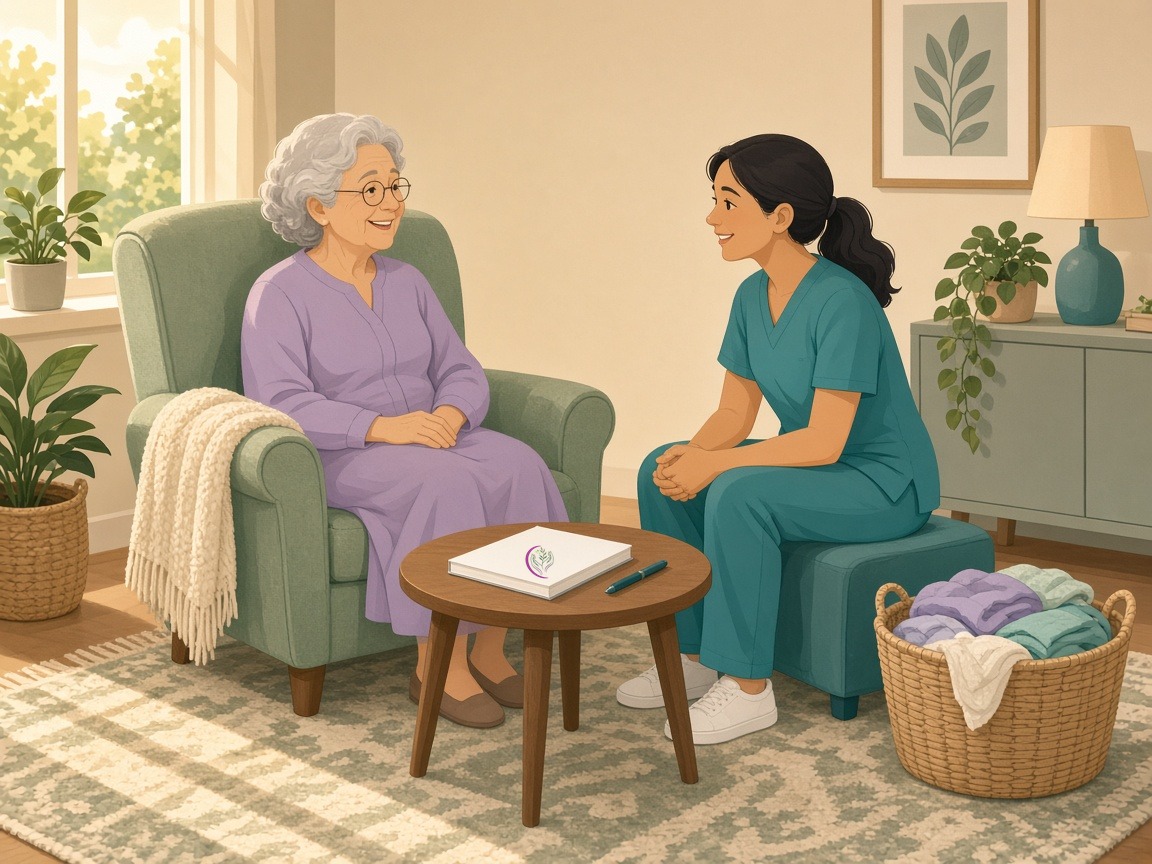
The end of a visit is short. The kitchen is put back the way you keep it. The caregiver asks if you need anything before they go and what you'd like done next time. Speak up here. It's the easiest moment to change the plan.
When a visit looks different
Not every visit follows that order. After a surgery, the first weeks home might center on getting in and out of a chair, meals you don't have to stand for, and help to the bathroom. With live-in care, a caregiver lives in the home, so the day has a different rhythm. We also care for younger adults with disabilities, and their visits follow the same idea: built around their routine and their house.
What a caregiver doesn't do
A caregiver doesn't give shots, change doses, dress wounds, do therapy, or tell you what a symptom means. They don't make decisions about your money or your schedule for you. If something seems off, they tell you so the right person can take a look.
For the full list of what's covered and what isn't, read what non-medical caregivers actually do.
Write down your hardest hour
Before anyone comes over, think about the one stretch of the day that's hardest right now. For a lot of people it's the morning shower or getting supper on the table at five. Start there. The rest of the visit can be built around it, and you can change it whenever you like.