Privacy belongs in the job description when someone helps you at home. Closed doors, your own phone calls, and no talking about you in the third person in your kitchen are the baseline.
These are personal care privacy tips at home you can put in writing. Use what fits. Skip what doesn't. Nothing here is medical advice.
Closed doors are the default
Your bathroom and bedroom are still yours. Help does not erase that.
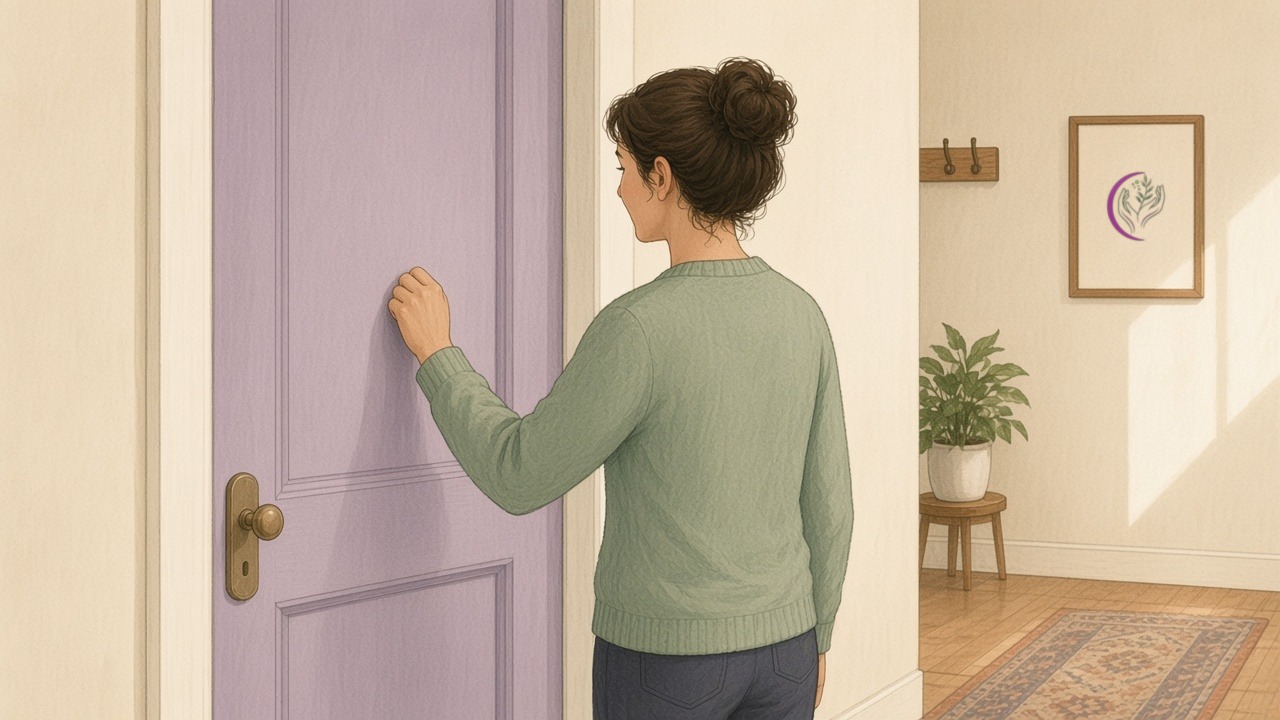
- The door stays closed for bathing, dressing, and toileting unless you ask someone in.
- Anyone helping asks before they enter. "May I come in?" is a real question, and "not today" is a full answer.
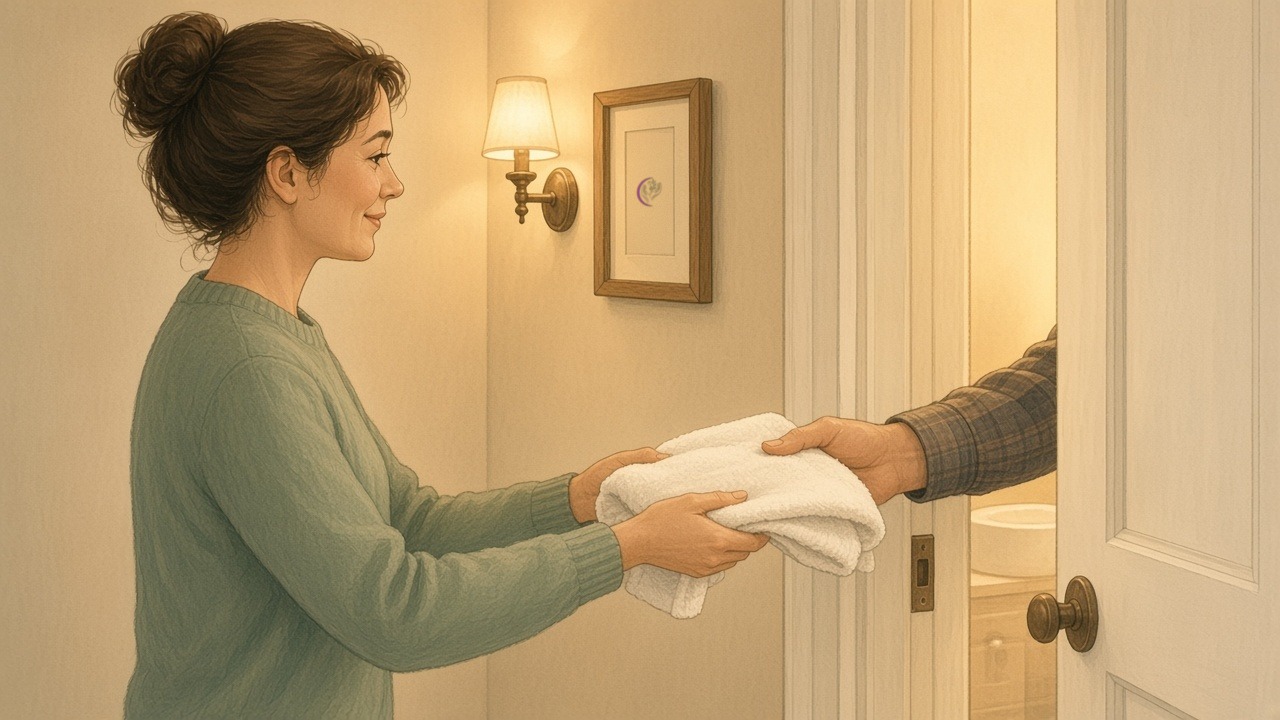
- Towels, robe, and clean clothes get staged before water runs, so nobody has to wander in and out hunting for things.
- If you want standby only, they wait outside until you call. If you want a hand with one step, name that step. If you want the door shut the whole time, that stands too.
Non-medical bathing help at home works better when the room is predictable and the door rules are clear. Dignity in home care starts with the door and clear rules, long before anyone gives a speech about independence.
Your phone calls and mail stay yours
Help with the house leaves your conversations alone.
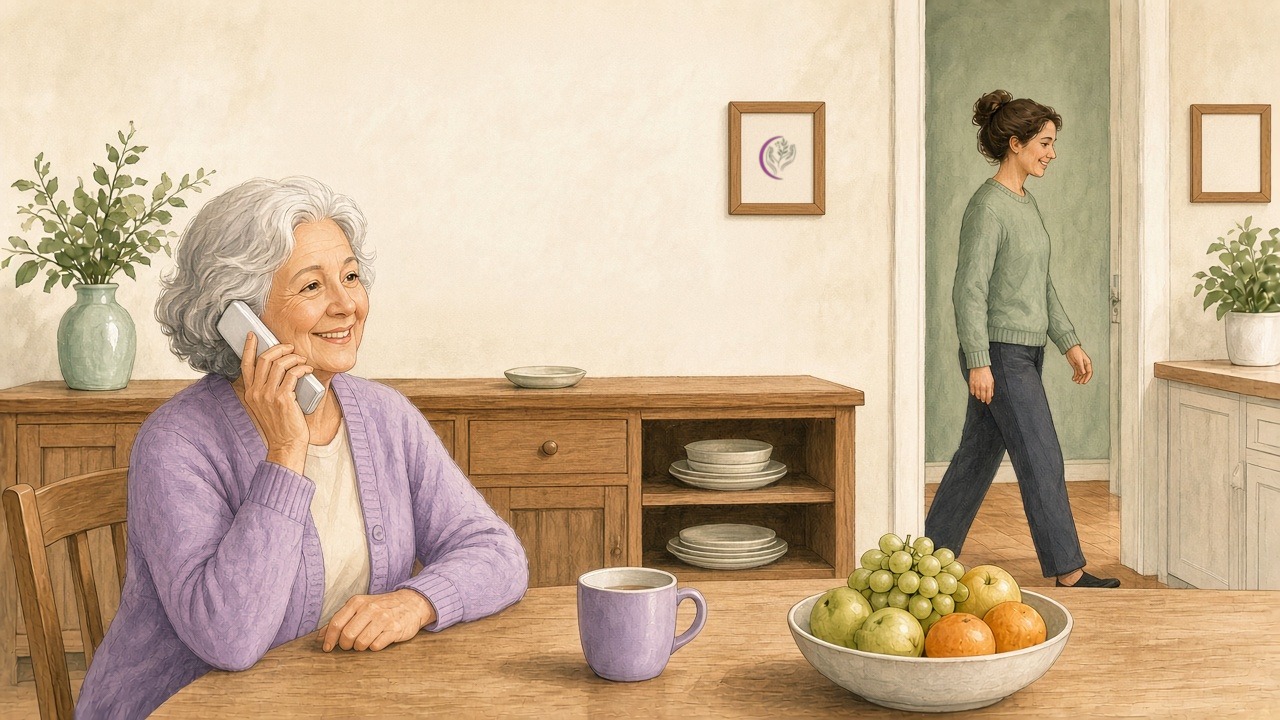
- Phone calls are private unless you invite someone to stay.
- Mail and messages stay yours unless you have named who may open them.
- If a caregiver needs to tell family something you asked them to watch for, they tell you first, or the one person you named. You stay in the middle of your own news.
- Visits from friends, church, or the doctor are yours to announce. Helpers do not fill in the room with commentary you did not ask for.
Write one line on a card by the phone if it helps: "Calls and mail are private unless I say otherwise." Hand the card to anyone new. You should not have to re-argue the same point every Tuesday.
No third-person talk in your kitchen
You are in the room. Talk to you.
- "She usually likes tea" becomes "Would you like tea?"
- Updates about your morning go to you first, not over your head to a relative on the porch.
- Pet names stay off the table unless you have said you want them.
- Disagreements about what you "should" eat, wear, or do wait until you are part of the conversation, or they wait until another day.
Third-person talk turns your kitchen into a waiting room. One firm line covers most of it: "Talk to me when I'm here. Don't talk about me." Put it on the fridge if you want. Repeat it when you need to. Good people take the correction; the ones who don't need a different assignment.
A short privacy brief you can hand over
Write this once. Tape it inside a cupboard or leave it in the caregiver folder.
- Door rules. Closed for personal care. Ask before entering. "Not today" stands.
- What I do myself. List the steps you still handle: face, private areas, choosing clothes, starting the water.
- What I want help with. Name the days and the steps. "Back and hair on Tuesday and Friday" is clearer than "help with the shower."
- Who gets updates. You first, or one named person. Not a play-by-play to the whole family unless you asked for that.
- Phone and mail. Private unless you say otherwise.
- Kitchen and drawers. Nothing moves without a conversation with you first.
- Words that are off-limits. Third-person talk in the room. Pet names you did not choose. Jokes about accidents or "being stubborn."
You are setting the terms of help at home without a facility. Adults get to do that.
Scripts you can say out loud
Keep a few lines ready. Say them once. Say them again when you need to.
- "Please close the door. I'll call when I'm ready."
- "Ask before you help with bathing or dressing. Not today means not today."
- "Don't talk about me while I'm in the room. Talk to me."
- "My calls are private. If you need to reach my daughter, tell me first unless I've already said otherwise."
- "Don't rearrange the bathroom or the kitchen. If something needs to move, ask me."
- "Company is welcome. Leave my schedule alone unless I've asked for help with it."
If the person helping is your adult child and the bathroom has gotten loaded, it is fair to ask for a different arrangement. Many families sleep better when a helper handles bathing so visits can stay about coffee and conversation. If your son or daughter wants the family how-to for that conversation, point them to our guide on setting up bathroom help without making it awkward. That page is written for them. This one stays yours.
What good help looks like on a regular day
Here is the shape of a respectful morning or evening, in plain terms.
- They arrive, greet you by name, and follow the list you already wrote.
- Personal care happens with the door closed and the steps you agreed to.
- Meals, light tidy-up, errands, and rides stay inside what you asked for that day.
- They notice things you asked them to watch for, and they report those to you or your named contact.
- They leave the house looking like your house.
What they don't do: nursing, therapy, diagnoses, or deciding your life for you. Non-medical support has clear edges. Privacy sits inside those edges every time.
When you're ready to talk it through
If you want help that already works from closed doors and written rules, Sovereign Serenity Care offers a free in-home consultation. We sit at your kitchen table. We talk through what you want help with and what stays private. No scare tactics. No talking over you.
Privacy is part of the job. Good help treats it that way.