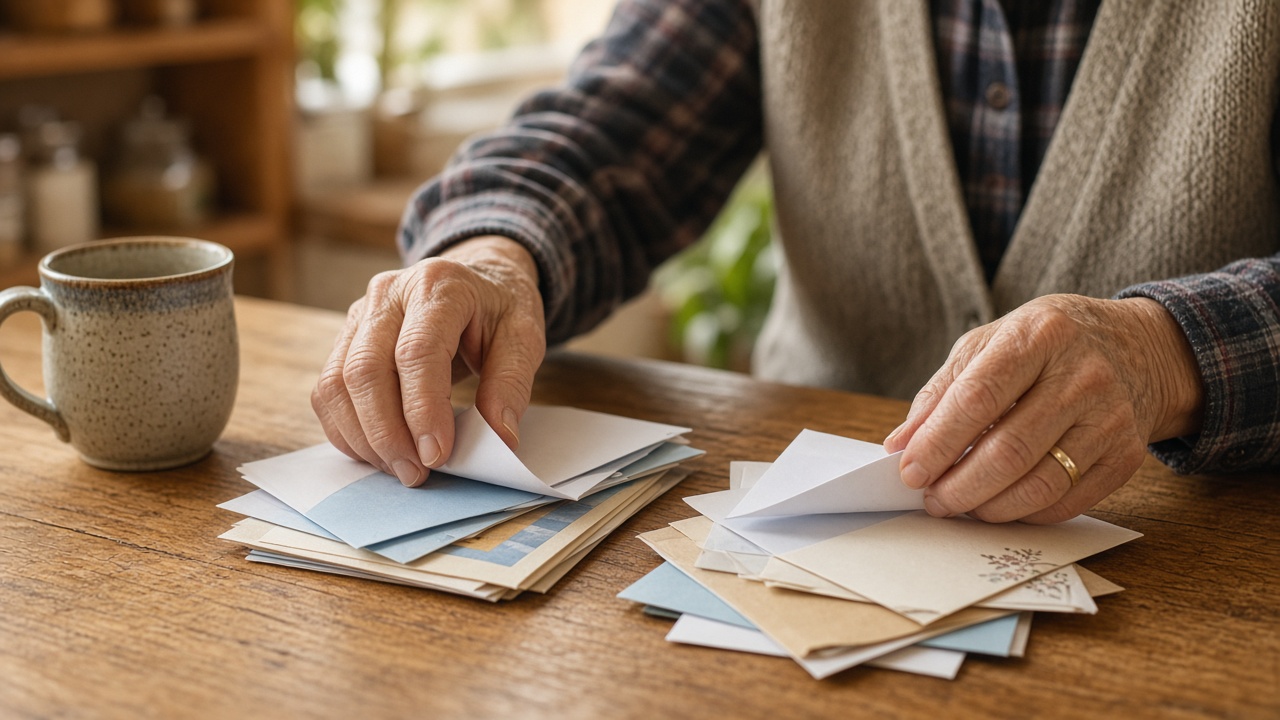
Clear the mail pile. Sit down. Brain games for seniors at home work best when they feel like something you’d do anyway, not homework from someone else’s plan. No tablet required. No community-center class. Ten or fifteen minutes is enough.
Pick one game. Stop when you’ve had enough. That’s aging in place activities done your way.
Before you start
Two minutes is enough.
- Clear a space at the kitchen table. Newspapers and mail can wait in a pile.
- Good light. If the overhead is harsh, turn on a lamp instead.
- Water within reach. Phone on silent if you don’t want interruptions.
- Optional: invite one person to play with you, not for you. Cards and conversation beat being quizzed.
None of this is medical advice. If a doctor has given you specific guidance, follow that. These are ordinary memory games seniors have used for years. Kitchen-table versions.
Game 1: Two-pile sort
Mail, photos, or coupons all work.
What you need: A stack of mail, old photos, or clipped coupons; two empty bowls or folders labeled KEEP and TOSS (or KEEP and GIVE AWAY).
How to play:
- Set a timer for ten minutes, or don’t. Your call.
- Take one item at a time. Decide: keep or toss/give away.
- Say the rule out loud once (“Bills and letters stay; catalogs go”) so you’re not reinventing it mid-stack.
- When the timer rings or the stack is done, stop. Put the KEEP pile where you want it.
Why it counts: You’re making decisions, reading, sorting by category, and finishing something. That’s brain work without a worksheet.
Game 2: Kitchen-table card matching
What you need: One deck of regular cards (or a matching-card set if you have one).
How to play:
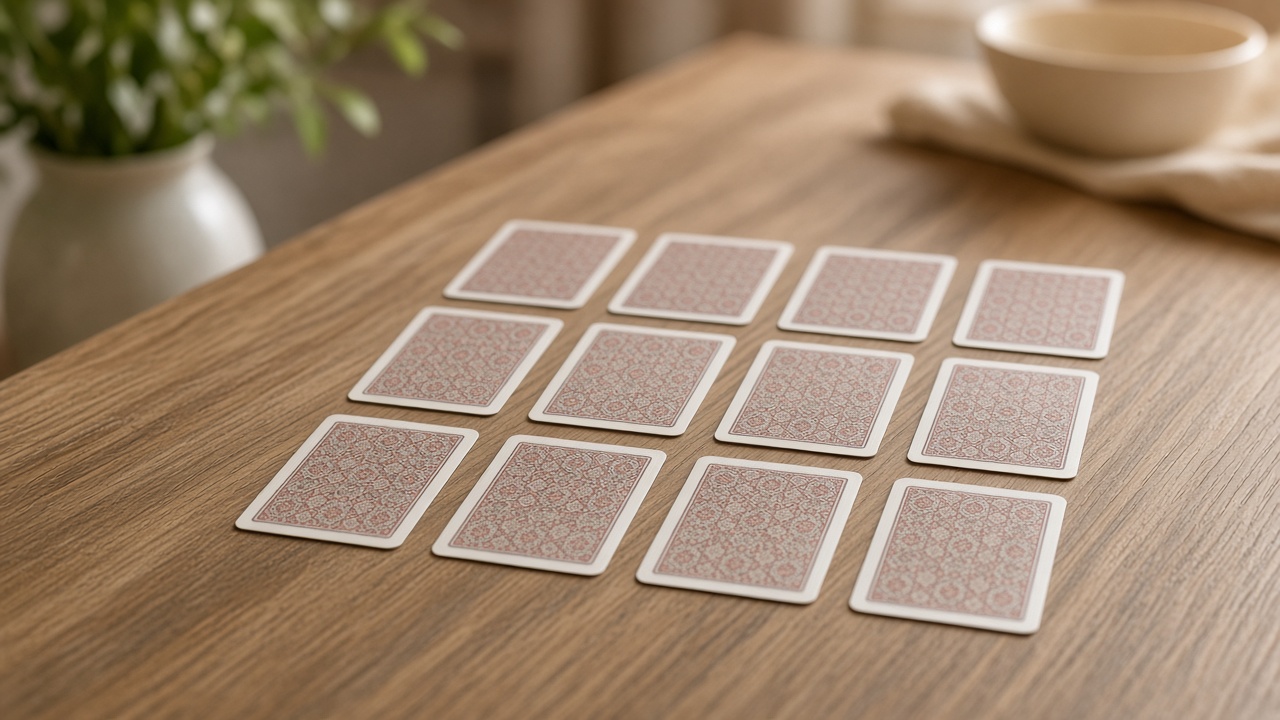
- Shuffle. Lay out twelve cards face down in three rows of four (start smaller if you prefer).
- Turn two cards. If they match by rank (two queens, two sevens), set them aside. If not, turn them back.
- Take turns if someone joins you, or play solo and track how many turns you need to clear the board.
- Add four more cards next time if twelve felt easy.
Tip: Keep score lightly or not at all. The point is noticing patterns, not winning a tournament.
Game 3: “What’s missing?” tray
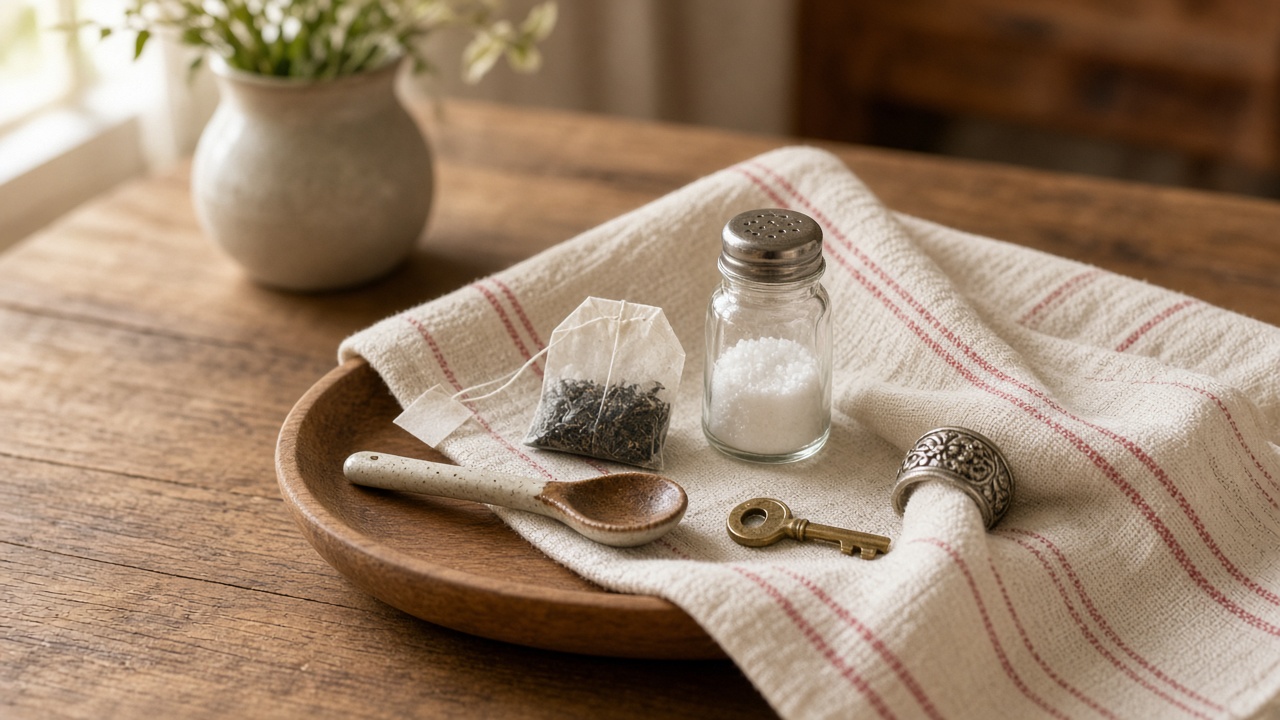
What you need: A tray or cutting board and five to eight small kitchen objects (spoon, tea bag, salt shaker, key, napkin ring). Nothing breakable you’re worried about.
How to play:
- Place the objects on the tray. Look for thirty seconds.
- Cover the tray with a dish towel. Have a helper remove one object, or close your eyes and remove one yourself if you’re alone (put it in a drawer so you can’t peek).
- Uncover. Name what’s missing.
- Replace it. Mix the layout. Play again with a different missing item.
Alone variation: Photograph the tray with your phone, remove one item, then check the photo only after you’ve guessed.
Game 4: Word chain at the table
What you need: Nothing but conversation, or a notepad if you like writing the words down.
How to play:
- Pick a starting word you like: porch, coffee, river, Tuesday, Temple, Austin.
- The next word must start with the last letter of the previous word (coffee → egg → garden).
- Keep the chain going for two minutes, or until you both laugh and lose the thread.
- Optional rule: stick to one theme (kitchen words only, or Texas towns only) to make it harder.
Why it counts: You’re retrieving words, listening, and following a rule. Many seniors enjoy this more than crossword pressure.
Game 5: One-hand clock or calendar race
What you need: A wall calendar, a paper agenda, or a simple clock face you can point to; a pencil.
How to play:
- Name today’s date out loud. Find it on the calendar and mark it if you haven’t.
- Ask yourself (or your partner): “What day is three days from now?” Point to it.
- “What was last Tuesday’s date?” Find it without flipping pages more than once if you can.
- For the clock version: set a kitchen timer for a random time (say 3:20). Glance away, then say what time it will show when it rings, or draw the hands on a blank clock sketch before you look.
Keep this gentle. You’re practicing orientation and planning, not racing a stopwatch someone else holds.
How to keep it yours
- Same seat, same time. After breakfast or with afternoon tea, so it becomes a habit you chose.
- One game per day beats five half-finished ideas.
- No grading. If a caregiver or family member joins, they play as a guest. They don’t announce how you “did.”
- Skip days. Rest counts too.
Brain games for seniors at home should leave you feeling like you spent a pleasant stretch at your own table.
When you want company at the table
If you’d rather have a familiar person sit with you for cards, sorting, or a ride to pick up a fresh deck at H-E-B, Sovereign Serenity Care offers a free in-home consultation. We talk in your kitchen about companionship and everyday help, on your terms.
It’s still your table. Good company keeps it that way.