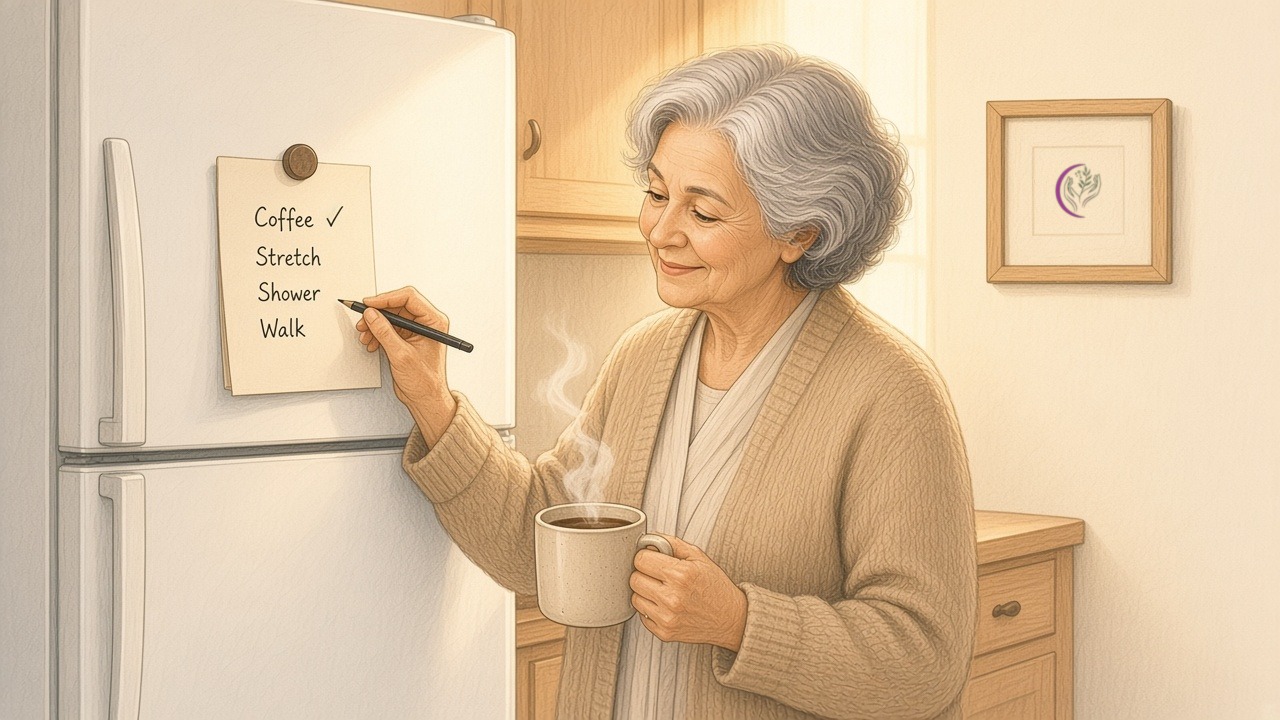
Your morning still belongs to you, even once someone comes in to help. In real life, staying in your own home looks like a list on the fridge, a kitchen nobody rearranges, and a clear way to ask for help with the heavy parts only.
Use what fits and skip what doesn't. Nothing here is medical advice.
A morning checklist that keeps you in charge
Write this once. Stick it on the fridge or keep it in a notebook, and hand it to family or a caregiver so the day starts on your terms.
- Wake window. When you like to get up, and how long before you want conversation.
- Coffee or tea first. Where you take it, and whether the bathroom waits until after.
- Dressing order. What you do yourself, what you'd like a hand with, and what is off-limits today.
- Medication reminders only. If someone reminds you, they remind. They don't take over the bottle unless you've asked them to.
- Breakfast plan. What you usually eat, what's already in the fridge, and what you'd rather skip.
- One must for the morning. An appointment, the walk to the mailbox before the heat sets in, a call to a friend. One is enough to give the day a shape without turning it into someone else's to-do list.
- Quiet time. When the TV stays off, or when the porch is yours alone.
You don't need anyone's permission to set your own schedule. The list just makes it easier for other people to follow it.
Kitchen and privacy rules that keep control
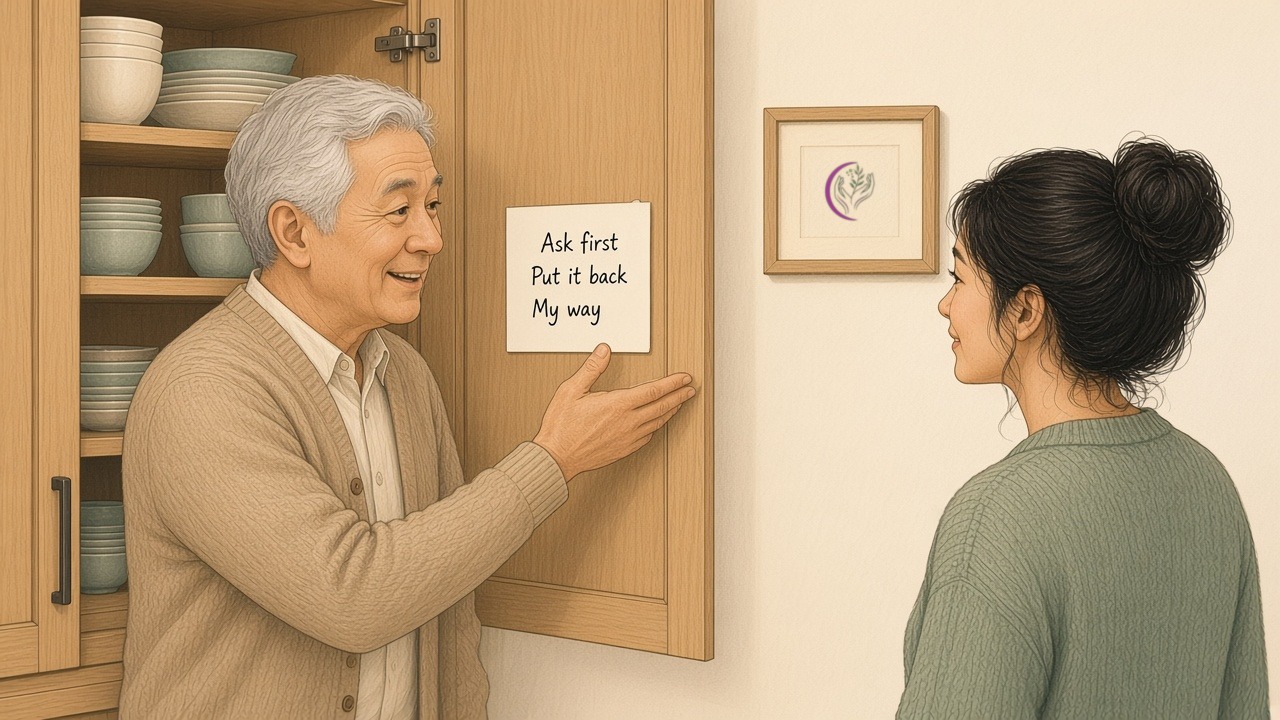
Put these in writing. Tape them inside a cupboard door if you like. Rules that are written down get followed more often than rules you have to repeat.
Kitchen. Spices, pans, and the good mug stay where you put them. Nothing moves "for safety" without a conversation with you first. A light tidy-up is fine. Rearranging is not. Leftovers get labeled the way you label them, or not at all.
Bathroom and bedroom. The door is closed when you want it closed, and anyone helping asks first. Our post Privacy is part of the job has the full set of door, phone, and mail rules.
The rest of the house. Your chair is your chair. Helpers knock the way a guest would. Saying yes to help with dinner is not a promise of help with laundry forever.
Rules like these let you stay independent at home without every visit turning into a negotiation.
Five ways to get help without handing over the keys
- Name the task, not the day. "Help with the shower on Tuesdays" is clearer than "help whenever." The rest of the week stays yours.
- Keep one job that stays yours. Bills, the remote, the garden hose, the grocery list. Pick something you still run, and don't give it all away at once.
- Use a short script. Practice one sentence: "I want help with this. I don't want help with that. Ask me before you move anything." Say it once, and say it again when you need to.
- Start with the hardest part. Pick the one thing you'd most like help with, maybe getting supper on the table at five or the weekly ride to H-E-B, and see how it feels before you add anything else.
- Decide who gets updates. If a caregiver notices something you've asked them to watch for, they tell you first, or the one person you've named. You stay in the middle of your own plan.
What to say to a caregiver
Keep these lines on a card by the door:
- "Please follow my morning list. Don't make up a new one."
- "Ask before you help with bathing or dressing. 'Not today' means not today."
- "Don't rearrange the kitchen. If something needs to move, talk to me first."
- "If you need to tell someone else something about my day, tell me who and what, unless I've already named who to call."
- "Company is welcome. Running my schedule is not, unless I've asked for that."
The short version of what a non-medical caregiver does: help with bathing and dressing when you want it, meals, light housekeeping, errands and rides, and company. No nursing or therapy, no diagnosing, and nobody deciding your life for you. Our post on what non-medical caregivers actually do has the full list.
Keeping your body and mind busy
You don't need a program. A few small habits you'll actually repeat do more than a big plan you drop by Thursday.
If you want something for your body, our 10-minute morning mobility routine uses one sturdy chair and no equipment. If you'd rather keep your mind busy, try one of the brain games you can do at the kitchen table, or put a phone call to someone you enjoy on your morning list so it actually happens.
If your son or daughter wants to read their side of this, our family guide on setting up bathroom help without making it awkward is written for them.
When you're ready to talk it through
If you want a second pair of hands for the heavy parts and clear rules for the rest, Sovereign Serenity Care offers a free in-home consultation for seniors in and around Austin. We sit at your kitchen table and talk through what you want help with and what you don't. No scare tactics, and no talking over you.
Book a Free Consultation when you're ready, or call (512) 888-9105.
Not sure your address is in our area? Check your address first.
It's still your house.