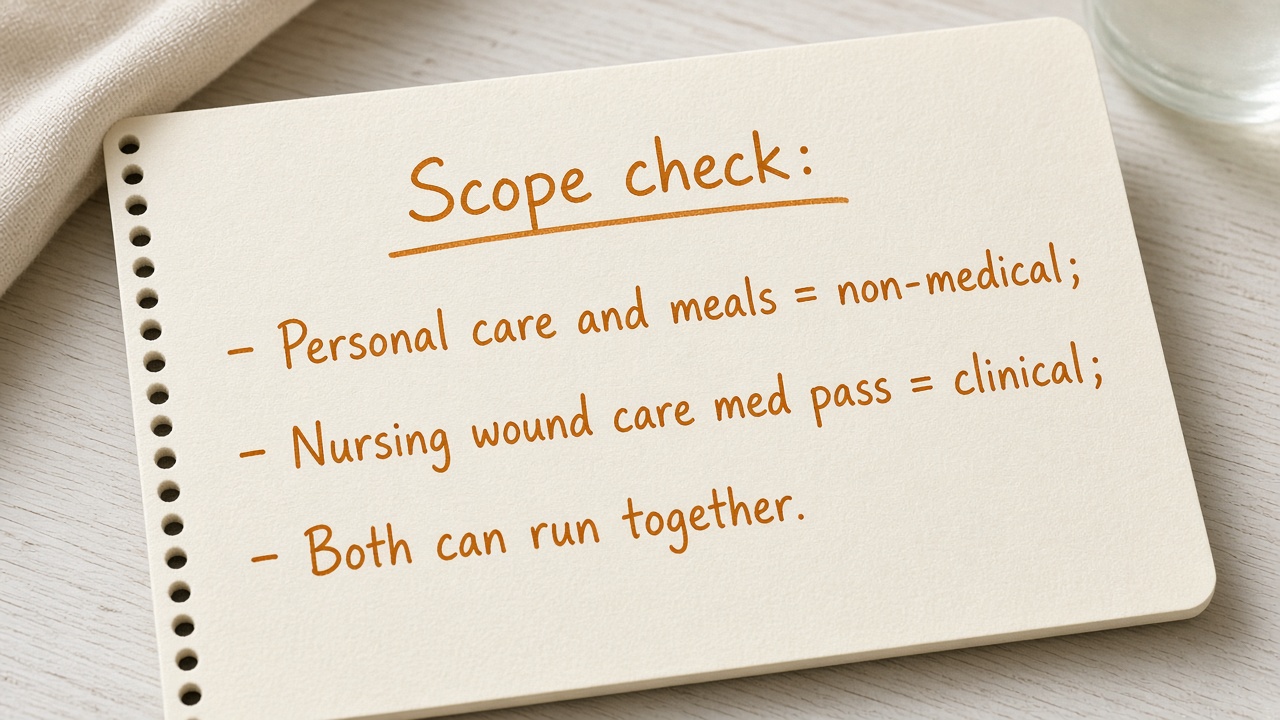
Partners lose time when a referral lands in the wrong lane. This scope FAQ is non-medical vs skilled home care referral guidance for professionals: when to refer out to Sovereign Serenity Care, and when to keep the need clinical.
No consumer fear marketing. No claim that aides replace nurses. For patient/family plain-language scope, point to our Sovereign explainer on what caregivers do (consumer URL). This page stays B2B.
One-sentence split
- Skilled / clinical: ordered nursing, therapy, clinical assessment, med administration as nursing, wound care, and other licensed services.
- Non-medical: personal care, companionship, meals, light housekeeping, transportation/errands, respite, and routine support that keeps daily living workable between skilled visits.
If the home needs both, refer both. Complementary, not competitive.
Refer to non-medical when you see…
Check any that apply; one is enough to consider a referral:
- ADLs need hands-on help (bathing, dressing, toileting, transfer standby as non-clinical assist) and nursing is not the right craft for those hours
- IADLs are failing the household (meals, laundry, light tidy, groceries, rides to non-emergent appointments)
- Family caregiver burnout risk; planned respite hours would stabilize the plan
- Dementia / Alzheimer’s support need is routine, safety, companionship, not a new medical workup
- Skilled home health or hospice is in place (or ending) and gaps remain in evenings, mornings, or weekends
- Patient is homegoing from hospital or SNF and the empty-house problem is logistical, not a missing skilled order
- Clinic wants eyes-and-ears lifestyle observation reported to family (and to clinic only with permission), not a nursing assessment
When to refer out in practice: the barrier is time, hands, and consistency at home.
Keep it clinical when…
- New or changing skilled needs belong in nursing / therapy orders
- Medication administration requires licensed nursing (we may provide reminders only when the service plan says so; not a med pass)
- Unstable clinical picture needs triage through your clinical pathway
- Continuous licensed nursing or facility-level care is the appropriate recommendation
- The referrer’s goal is “prevent readmission” as a clinical outcome we would be asked to guarantee. We won’t accept that frame.
Escalate through your normal clinical channels. We will decline out-of-scope referrals quickly so the patient isn’t delayed.
Gray zone — call us for a thirty-second check
- Home health 2–3×/week; nights uncovered. Lean non-medical complementary hours.
- Hospice clinical team in; family needs sleep / showers covered. Lean non-medical family-support hours (no hospice clinical claims).
- “Medication issues” unclear. Clarify reminder vs administration before referring.
- Patient refuses bathing with family but accepts aide. Lean non-medical personal care.
- New weakness after discharge, no therapy order yet. Clinical review first; non-medical may assist ADLs once a plan exists.
- Faith-group member “needs help at home.” Non-medical intake; screen for hidden skilled needs at consult.
What non-medical caregivers do for partners
Quick scope card:
Do: personal care assist, meals, light housekeeping, companionship, dementia-friendly routine support (non-clinical), transportation/errands, respite, medication reminders if contracted, report “something’s different” to the named family contact.
Don’t: nursing procedures, therapy, diagnose, change clinical orders, replace physician/hospice/home-health decision-making, or market scare scenarios to families on your behalf.
Higher-than-minimum training and consistent matching are how we staff. They still do not convert an aide into a nurse.
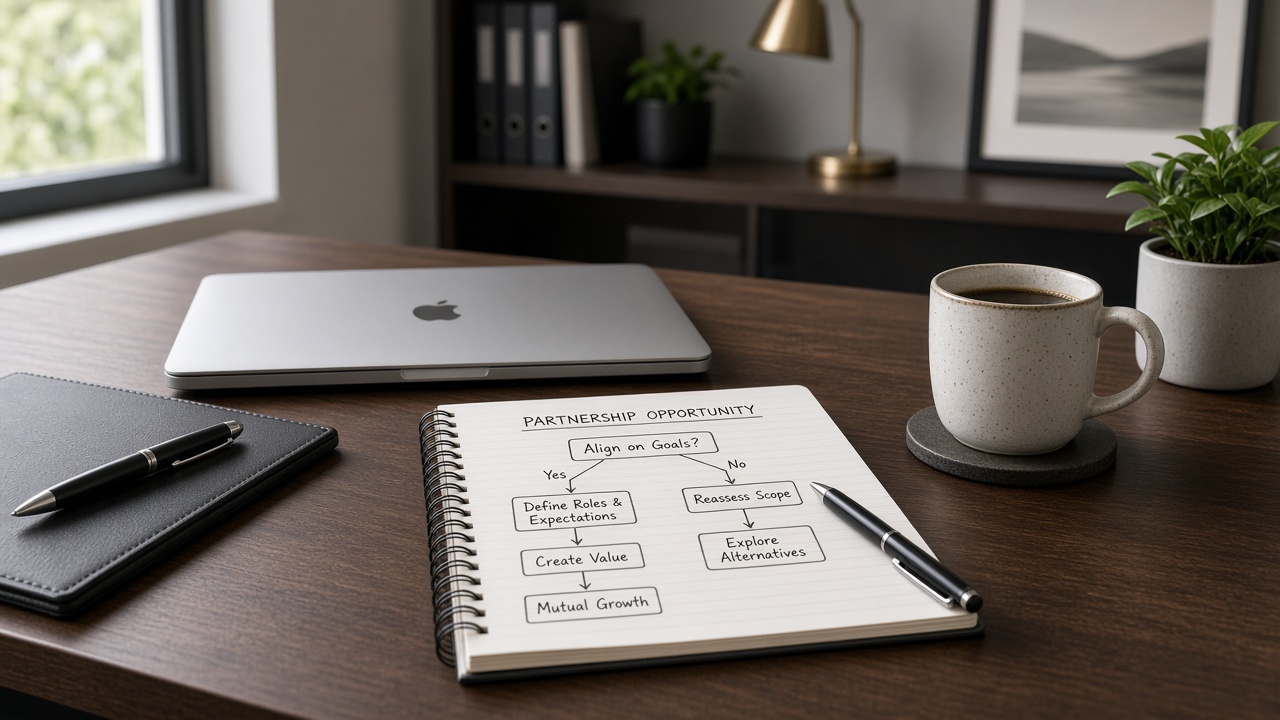
Referral decision tree
Short version:
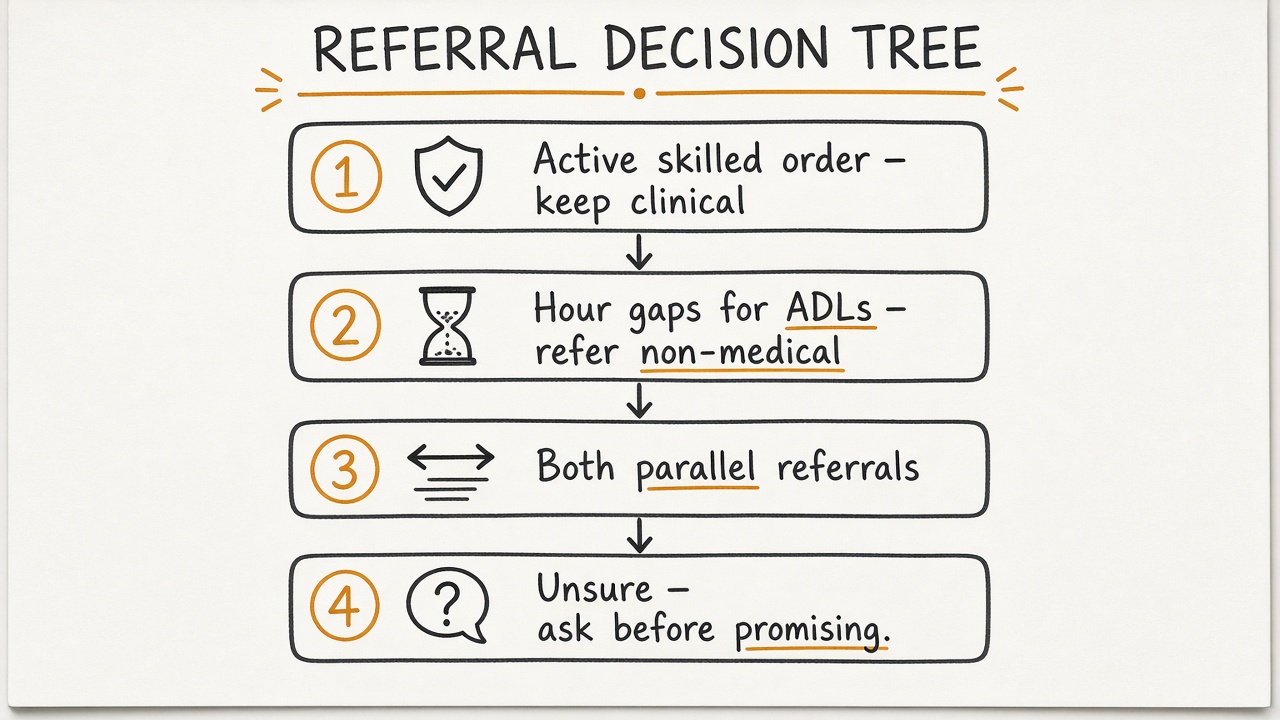
- Is there an active or needed skilled order? → Place/keep skilled referral.
- Are there still hour gaps for ADLs/IADLs/respite/companionship? → Refer non-medical.
- Both? → Parallel referrals; share calendars so visits don’t collide.
- Unsure? → Scope-check with us before promising the family a craft we don’t hold.
Partner-type cheat sheet
- Discharge / case management. Typical non-medical trigger: homegoing with ADL/evening gaps. Keep clinical if unstable clinical needs dominate.
- Home health. Typical non-medical trigger: hours between visits or the discharge-from-HH cliff. Keep clinical if new skilled orders are needed.
- Hospice. Typical non-medical trigger: caregiver respite / personal care volume. Keep clinical if symptom management changes are needed.
- SNF / rehab liaison. Typical non-medical trigger: first days home after rehab. Keep clinical if therapy/nursing is still the primary gap.
- Geriatrician / PCP. Typical non-medical trigger: lifestyle support, reminders, routine. Keep clinical if an acute workup or nursing admin is required.
- Faith / senior group leader. Typical non-medical trigger: member wants help at home with dignity. Keep clinical first if the leader hears medical red flags.
Documentation tip
For your chart, not ours.
A durable line for your note: “Referred to non-medical home care for complementary ADL/IADL/respite support; family advised agency does not replace skilled services.” That single sentence prevents later confusion about craft.
How to phrase the referral to families
Partner script you can use:
“I’m referring a non-medical home-care agency for help with daily tasks and coverage between clinical visits. They don’t replace nursing or therapy. They’ll schedule a free in-home consultation and tell you plainly what they can and can’t do.”
Geography
From Killeen through Austin to San Antonio. If we’re outside reliable staffing range, we say so on receipt rather than hold the case. Details: /for-partners.
Next step for partners
Not sure which lane fits? Scope-check with us anytime. For appropriate households, we’ll schedule a free in-home consultation and say plainly what we can and can’t do.