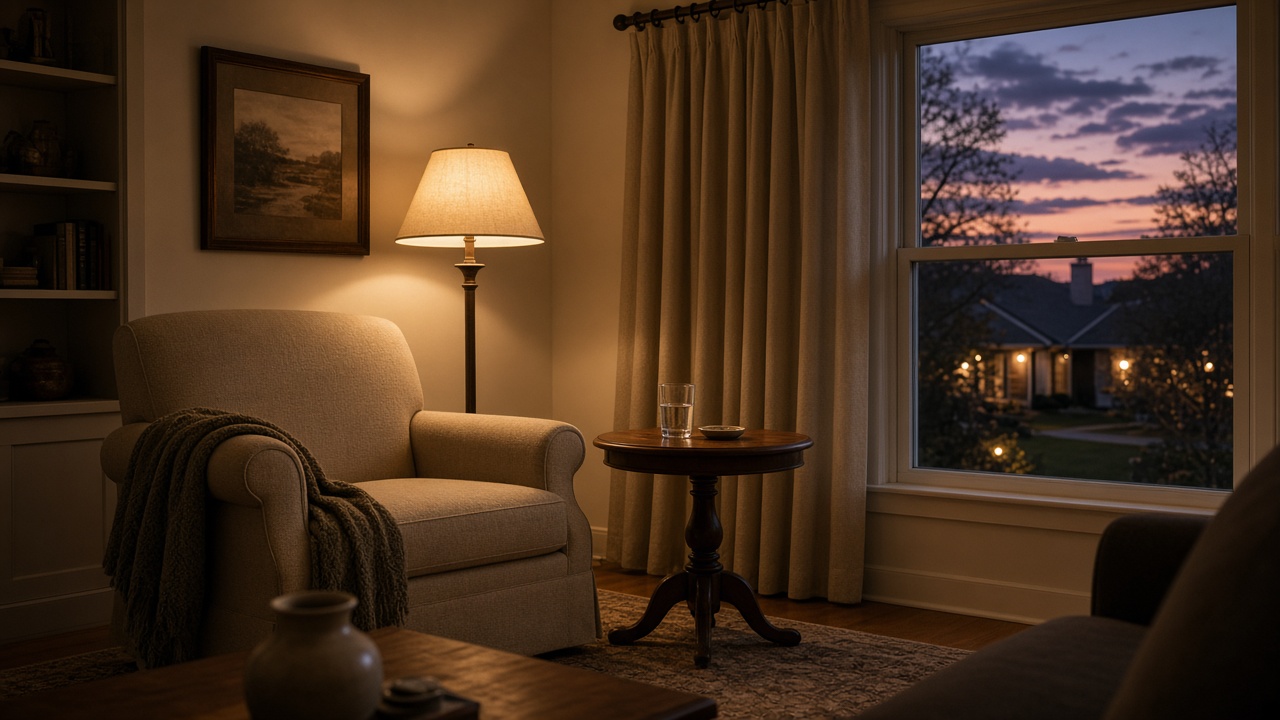
The stretch that usually breaks you is 5 to 9 p.m.: dinner, the bathroom, the quiet hours when you’re still at work or stuck on I-35. For families using in-home care for aging parents from Killeen through Austin to San Antonio, that window needs a plan you can hand to someone else.
This is a practical evening how-to. Non-medical only. No clinical claims. No scare tactics.
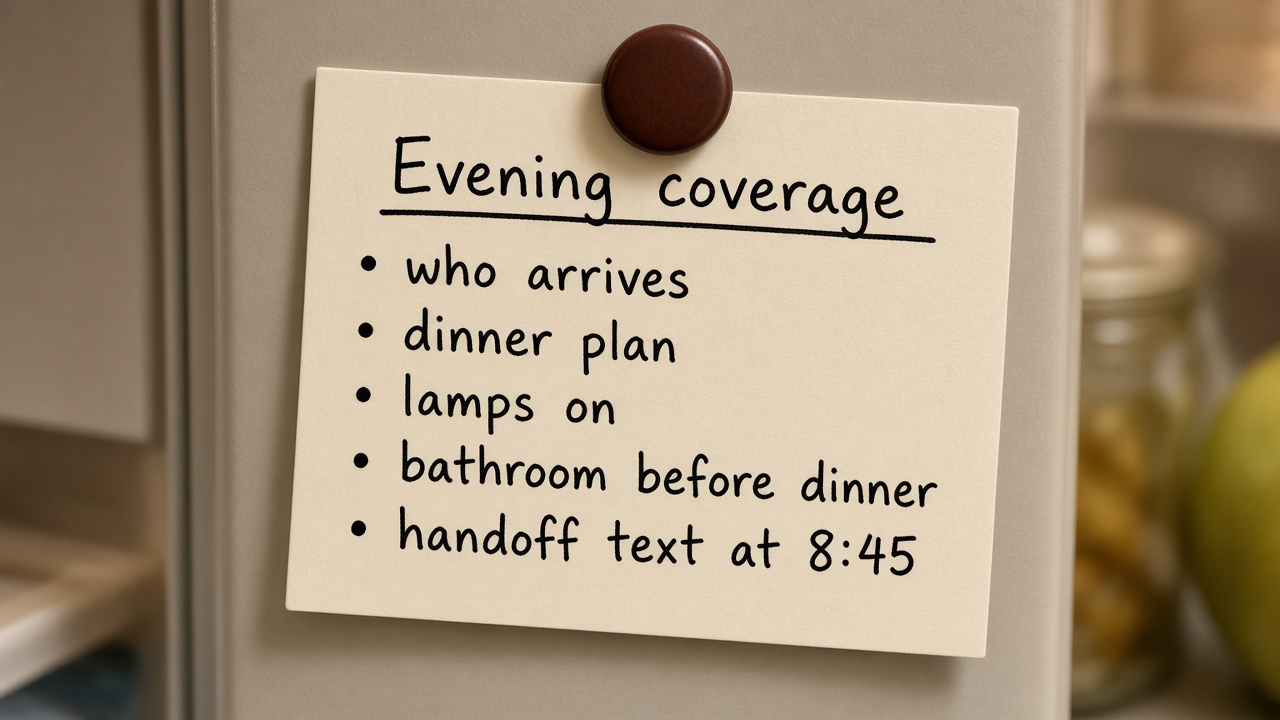
The 5–9 p.m. checklist
Print this if it helps.
Fill in the blanks once. Leave a copy on the fridge and one in a folder for the caregiver.
Before 5:00
- Who is on shift, and when do they arrive?
- Meds reminder list (who reminds; where the list lives). Not medical administration unless that’s already arranged elsewhere.
- Dinner plan for tonight (see meal ideas below).
- Lighting: lamps on in the main rooms before dusk; hallway clear.
- One contact number for you (and a backup) if something needs a call. Questions, not crises.
5:00–6:30
- Greeting and same short welcome phrase every time (“Hi, it’s Tuesday. Dinner at six.”).
- Bathroom offer before dinner, not after everyone is hungry and rushed.
- Simple dinner at the table they prefer; TV off or on their choice during the meal.
- Light clean-up so you’re not scrubbing at 9:30.
6:30–8:00
- Personal care if it’s on the plan (bathing, dressing, toileting). Door closed, dignity first.
- Calm activity: familiar show, cards, looking at photos, sitting together. Skip new projects.
- Evening meds reminder if that’s part of your system.
- Check doors, phone within reach, water by the chair if that’s their habit.
8:00–9:00
- Wind-down in the same order every night (see dementia-friendly tips).
- Handoff note started (what happened, what was eaten, mood, anything to watch).
- Your call or text window if you want a live update before you leave work (many families use 8:45).
A covered evening is sequence over improvisation.
Dementia-friendly evening tips
Non-clinical tips only.
If dementia or Alzheimer’s is part of the picture, keep the evening boring in the best way. Same sequence. Soft light. No quizzes.
- Same order every night. Dinner → bathroom → quiet activity → bed prep. Don’t invent a new flow when you’re tired.
- Lighting before dark. In Central Texas summers that may mean lamps on by 7:30; in winter, closer to 5:30. Shadows and sudden dark rooms confuse people who already work harder to stay oriented.
- One conversation at a time. Lower the TV when you talk. Don’t correct every wrong year or name. Redirect to the next step in the routine.
- Calm dinner. Familiar plate, familiar seat, fewer choices (“chicken or soup” beats a full menu).
- Avoid evening arguments. Save hard topics for morning when everyone’s sharper.
- Familiar face when you can. Continuity is a safety feature. New people reset the night.
Dementia care at home for families, in plain language, is routine and familiarity. This page is not a diagnosis, a treatment plan, or a facility pitch.
What to tell the caregiver before they start
Write a one-page brief. Read it together on day one.
- Preferred name and how they like to be addressed (never “sweetie” unless they’ve said so).
- Evening sequence — paste the 5–9 checklist with your fills.
- Privacy rules — closed door for personal care; ask before help; no talking about them in the third person in the room.
- Kitchen rules — what can be used, what doesn’t move, where leftovers go.
- Triggers and soothers — noise, crowded rooms, a favorite chair, a show that settles them.
- Who to call, and for what — you for updates; 911 only for true emergencies you’ve defined in writing.
- What “done” looks like — dinner eaten or offered, personal care complete, house left tidy, note written.
If your parent still wants a say, point them to our Sovereign piece It’s still your house. Written to them, not about them.
How to get a real handoff update
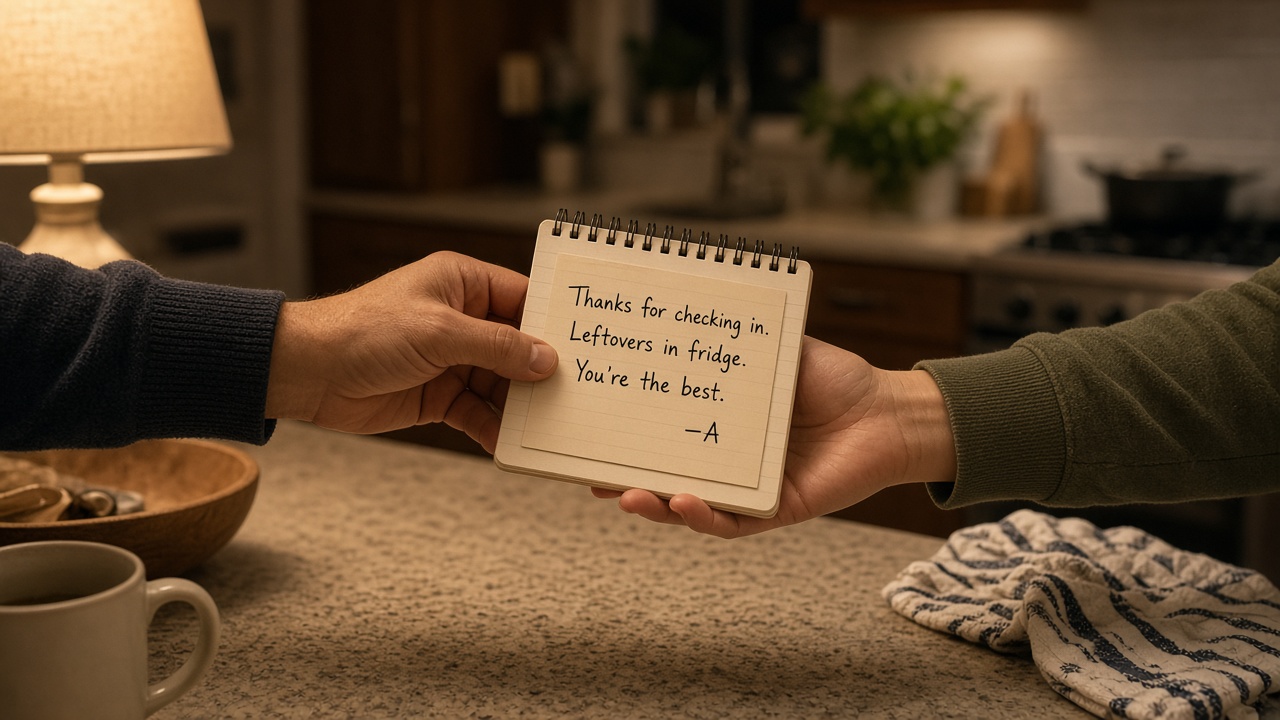
Don’t settle for “fine.” Ask for a short, same-format note every evening. Example template:
- Ate: (what / how much / refused)
- Personal care: (done / partial / declined — facts only)
- Mood / energy: (one line)
- Movement: (walked / sat / restless — plain words only)
- Anything to watch: (one item, or “nothing new”)
- Questions for you: (yes/no)
Agree on the channel: text at 8:45, note on the fridge, or a two-minute call. You want a clear picture of the evening, not a surveillance hobby. Cameras and gadgets can stay in the background if your family wants them; they don’t replace a person in the home or a clear handoff.
After hospital discharge, home care often fails in this gap. Skilled visits end; evenings don’t. A real update is how you know Tuesday night held.
Easy evening meals a helper can run
Keep a rotating list of five. Stock the fridge for them. No gourmet nights required.
- Sheet-pan chicken and vegetables — already portioned; oven at one temp; plate and done.
- Soup + toast + fruit — canned or leftover soup heated; familiar, warm, low fuss.
- Scramble or omelet + soft fruit — eggs, cheese they like, banana or berries.
- Pasta with jar sauce + bagged salad — one pot, one bowl; leftover-friendly.
- Slow-cooker leftovers night — morning load (you or a day helper); evening is serve and clean.
Label containers with the day. Write “no rearrange” on the spice shelf. Expert-guided meal plans can sit underneath this list when you have one. The helper follows your plan; they don’t invent one.
Respite is a planned handoff, not abandonment
Covered evenings aren’t only for nights you work late. They’re for sleep, a kid’s game at the high school, a quiet hour without your phone on your knee. Respite care Austin families ask for is a planned handoff to people who know the house, so the person at home stays supported and you stay human.
When you’re ready, start with a free in-home consultation. Walk the house. Say what 5–9 must cover. Hear plainly what non-medical care can and cannot do.
You don’t need a perfect plan before you call. You need a checklist, a handoff, and the house covered for the stretch that keeps breaking you.